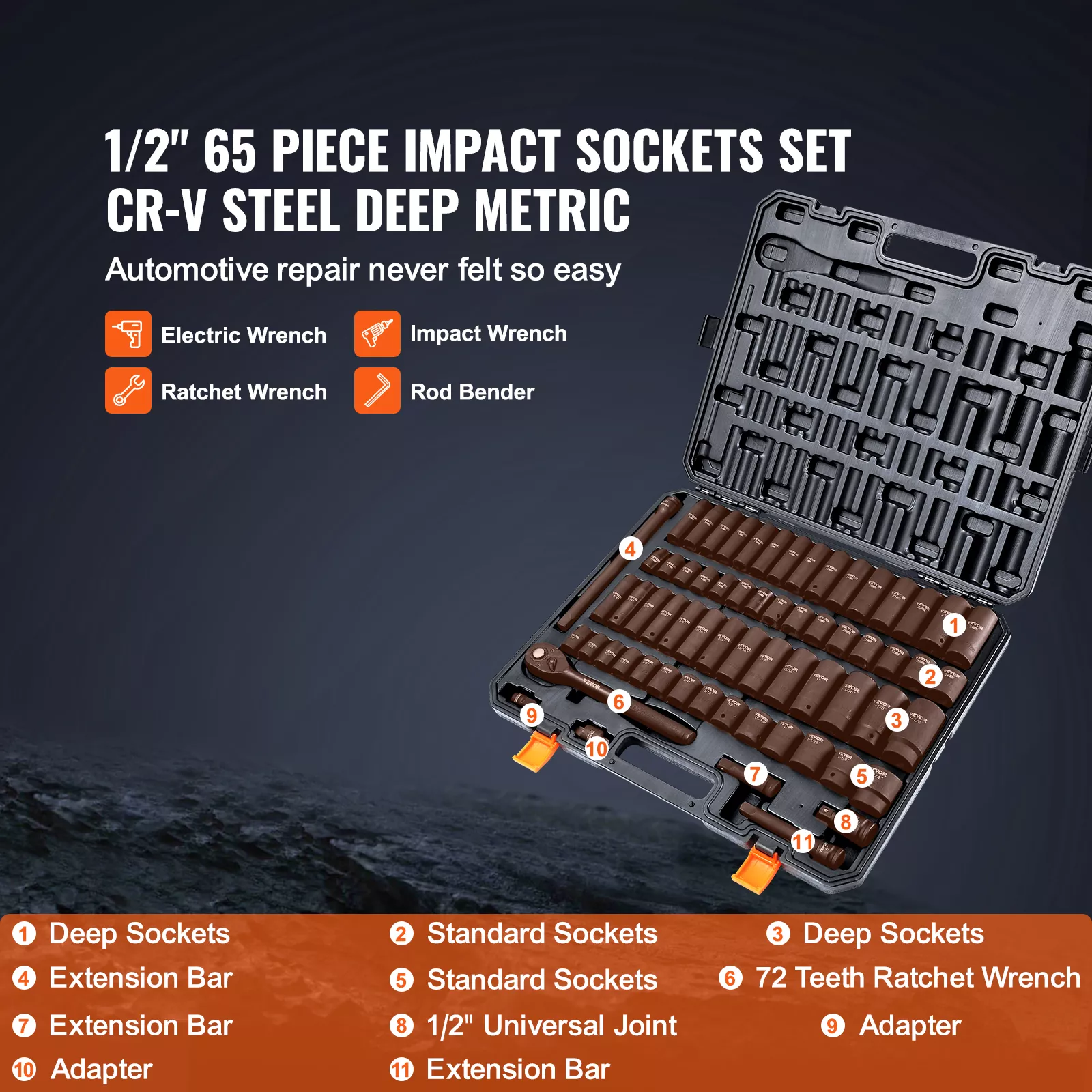
The Ultimate Impact Socket Set for Auto Repair & Heavy-Duty Applications
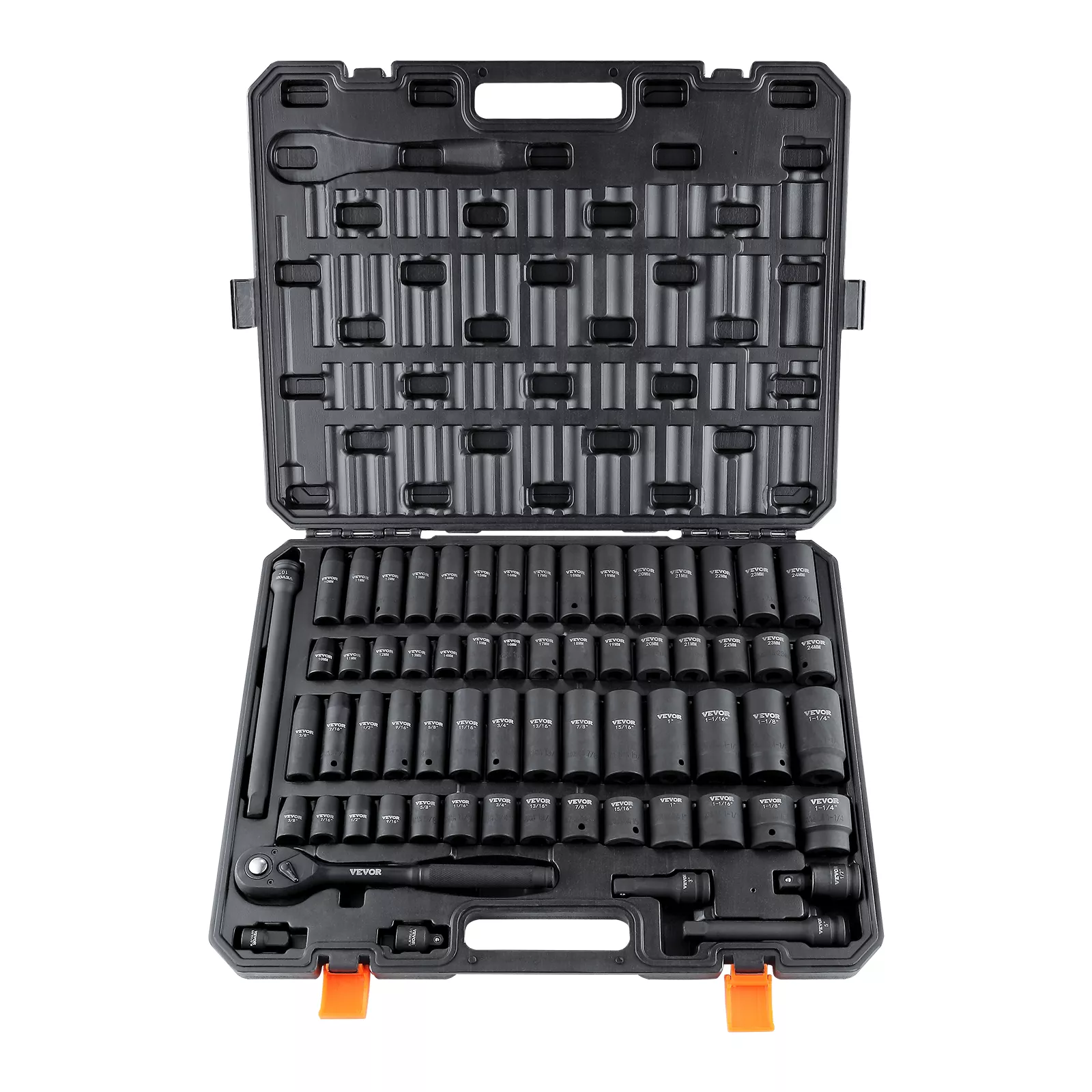
Whether you’re a professional mechanic or a DIY enthusiast, this 1/2″ Drive Impact Socket Set is a must-have for your toolbox. Designed for strength, durability, and precision, this 6-point socket set is crafted from premium Cr-V alloy steel, ensuring exceptional performance for all your automotive and industrial tasks. With easy-to-read size markings and a rugged construction, this set is built to handle the toughest jobs with ease.
Premium Quality & Durability
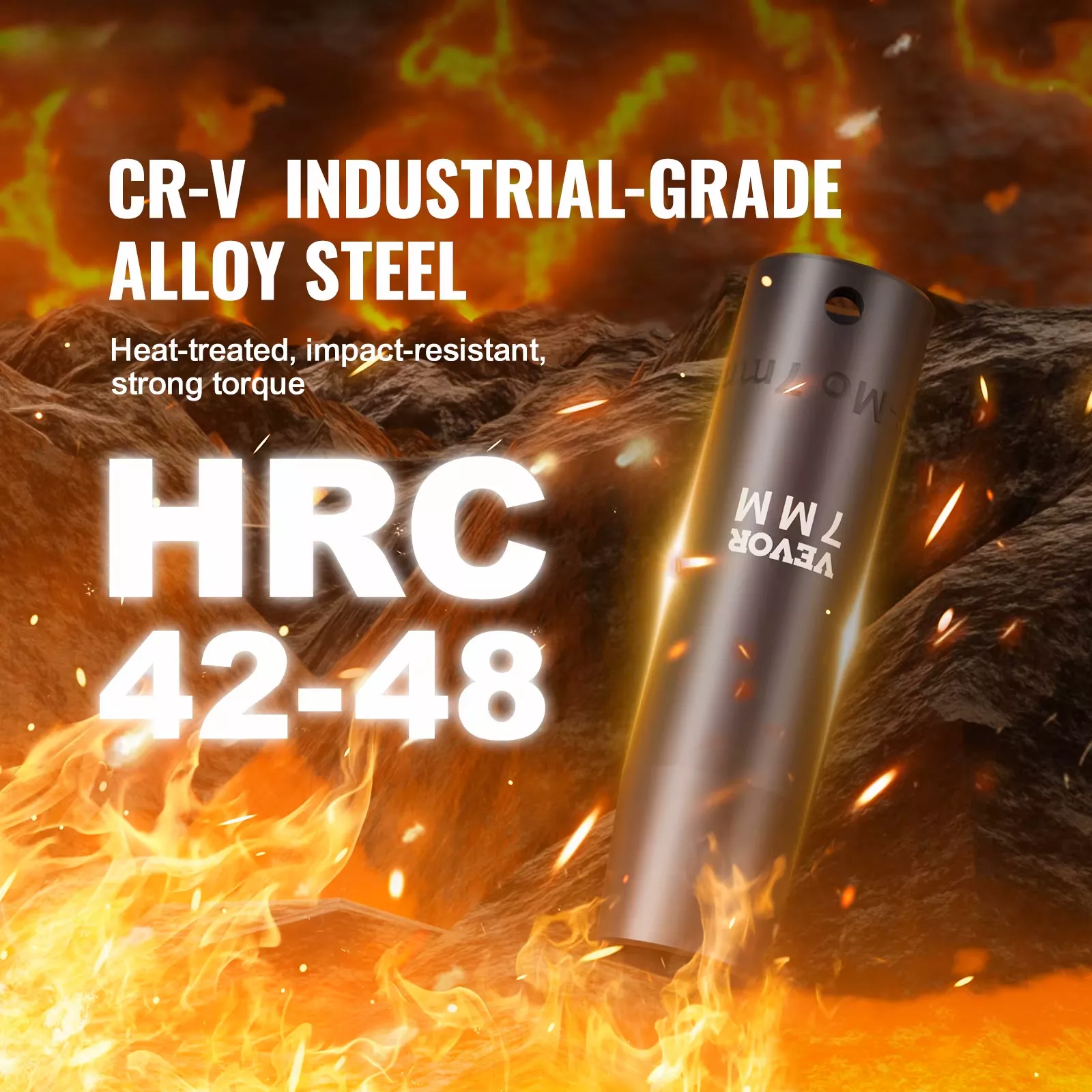
Built from industrial-grade Cr-V and Cr-Mo alloy steel, these impact sockets are designed to withstand high torque and heavy impact forces. The sockets undergo a vacuum heat treatment process, enhancing their strength, resistance, and longevity. Whether you’re working on car repairs, industrial maintenance, or heavy machinery, these sockets will deliver consistent performance.
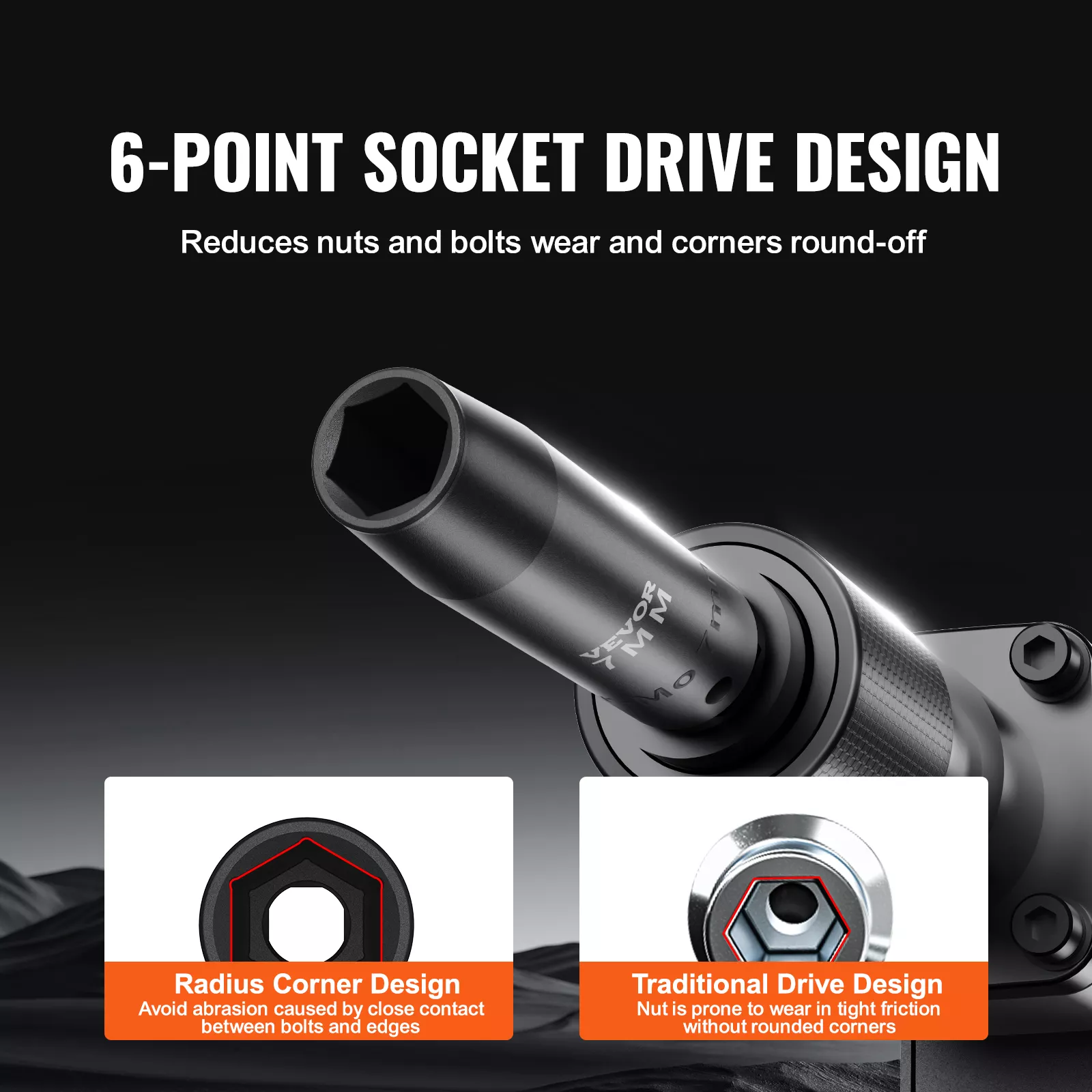
Hexagonal Design for Maximum Grip
The 6-point hexagonal design ensures a secure grip on fasteners, reducing pressure and preventing bolt rounding. Unlike traditional sockets, this design minimizes wear, making it easier to loosen stubborn or rusted bolts without damage.
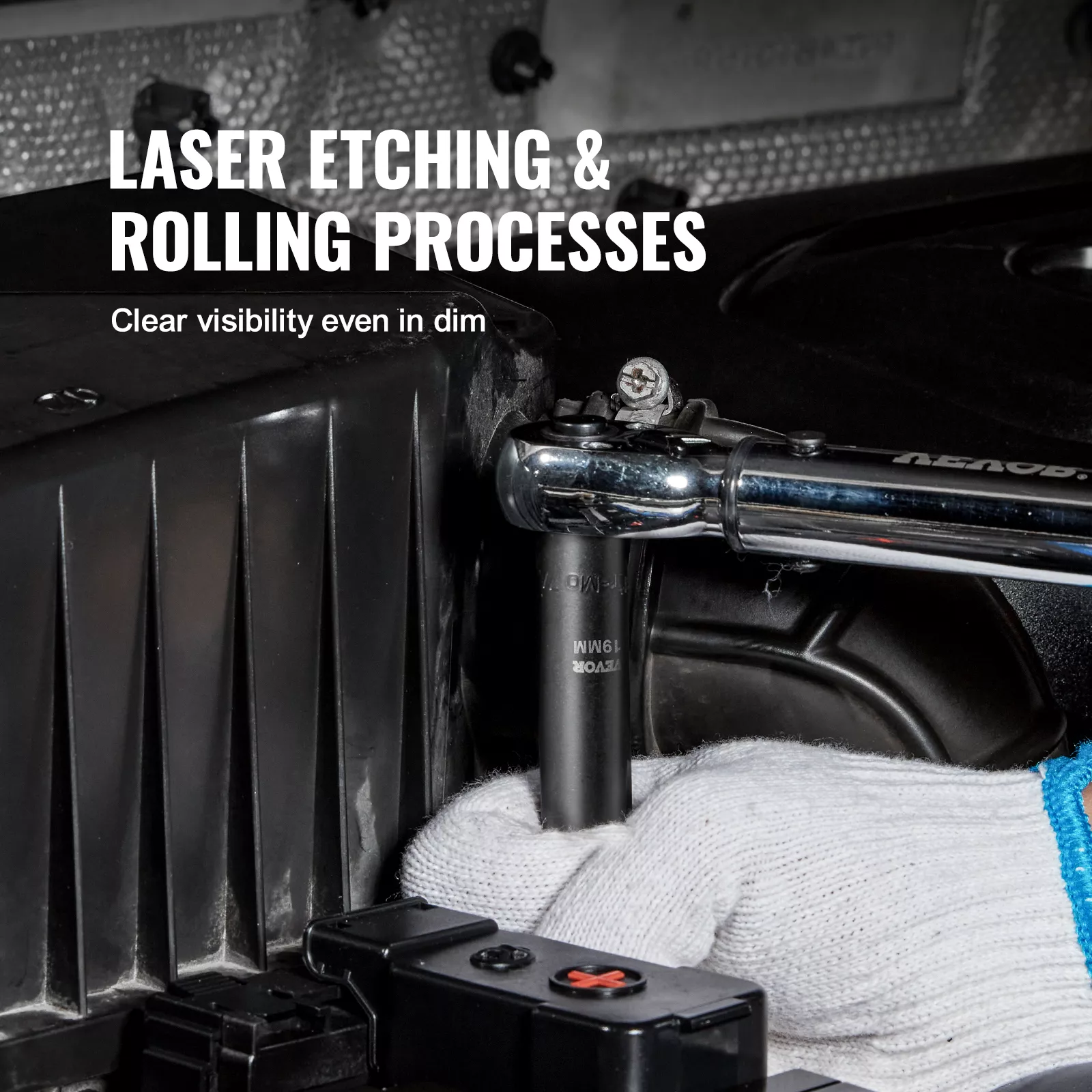
Easy-to-Read Size Markings
No more struggling to find the right size! Each socket features laser-etched size markings that are highly visible even in low-light conditions. The markings are wear-resistant, ensuring long-term clarity and ease of use.
Convenient & Organized Storage
This set comes in a sturdy metal toolbox that keeps your sockets secure and organized. Designed for portability, the compact case makes it easy to carry your tools wherever you need them, whether it’s in the garage, on a job site, or in a professional workshop.
What’s Included?
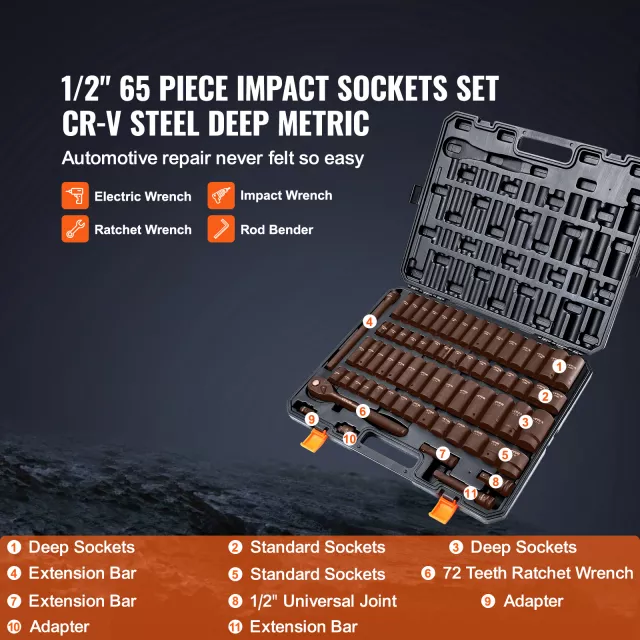
- A comprehensive set of impact sockets in SAE & Metric sizes, ranging from 8mm to 36mm
- Three extension bars (3″, 5″, 10″) for accessing tight spaces
- Impact universal adapter for added versatility
- 1/2″ F to 3/8″ M adapter for compatibility with different wrenches
Why Choose This Impact Socket Set?
- Heavy-Duty Construction – Made from Cr-V and Cr-Mo alloy steel for maximum strength and durability
- 6-Point Hex Design – Reduces wear, prevents rounding, and grips fasteners securely
- Laser-Etched Markings – Easy-to-read, wear-resistant size markings for quick identification
- Versatile Use – Ideal for auto repair, industrial maintenance, power tools, and more
- Portable Metal Toolbox – Keeps everything organized and easy to transport
Take Your Work to the Next Level
Whether you’re working on auto repairs, industrial equipment, or construction projects, this 1/2″ Drive Impact Socket Set is designed to help you get the job done faster and easier. Built tough and made to last, it’s the perfect addition to any mechanic’s or tradesperson’s toolkit.
Upgrade your tool collection today with this professional-grade impact socket set and tackle any task with confidence!
We are proud to offer international shipping services that currently operate in over 200 countries and islands world wide. Nothing means more to us than bringing our customers great value and service. We will continue to grow to meet the needs of all our customers, delivering a service beyond all expectation anywhere in the world.
How do you ship packages?
Packages from our warehouse in China will be shipped by ePacket or EMS depending on the weight and size of the product. Packages shipped from our US warehouse are shipped through USPS.
Do you ship worldwide?
Yes. We provide shipping to over 200 countries around the world. However, there are some locations we are unable to ship to. If you happen to be located in one of those countries we will contact you.
What about customs?
We are not responsible for any custom fees once the items have shipped. By purchasing our products, you consent that one or more packages may be shipped to you and may get custom fees when they arrive to your country.
How long does shipping take?
Shipping time varies by location. These are our estimates:
| Location | *Estimated Shipping Time |
| United States | 10-30 Business days |
| Canada, Europe | 10-30 Business days |
| Australia, New Zealand | 10-30 Business days |
| Central & South America | 15-30 Business days |
| Asia | 10-20 Business days |
| Africa | 15-45 Business days |
Do you provide tracking information?
Yes, you will receive an email once your order ships that contains your tracking information. If you haven’t received tracking info within 5 days, please contact us.
My tracking says “no information available at the moment”.
For some shipping companies, it takes 2-5 business days for the tracking information to update on the system. If your order was placed more than 5 business days ago and there is still no information on your tracking number, please contact us.
Will my items be sent in one package?
For logistical reasons, items in the same purchase will sometimes be sent in separate packages, even if you've specified combined shipping.
If you have any other questions, please contact us and we will do our best to help you out.
Order cancellation
All orders can be cancelled until they are shipped. If your order has been paid and you need to make a change or cancel an order, you must contact us within 12 hours. Once the packaging and shipping process has started, it can no longer be cancelled.
Refunds
Your satisfaction is our #1 priority. Therefore, you can request a refund or reshipment for ordered products if:
- If you did not receive the product within the guaranteed time( 45 days not including 2-5 day processing) you can request a refund or a reshipment.
- If you received the wrong item you can request a refund or a reshipment.
- If you do not want the product you’ve received you may request a refund but you must return the item at your expense and the item must be unused.
We do not issue the refund if:
- Your order did not arrive due to factors within your control (i.e. providing the wrong shipping address)
- Your order did not arrive due to exceptional circumstances outside the control of outstandingtrendsvault.shop (i.e. not cleared by customs, delayed by a natural disaster).
- Other exceptional circumstances outside the control of https://outstandingtrendsvault.shop
*You can submit refund requests within 15 days after the guaranteed period for delivery (45 days) has expired. You can do it by sending a message on Contact Us page
If you are approved for a refund, then your refund will be processed, and a credit will automatically be applied to your credit card or original method of payment, within 14 days.
Exchanges
If for any reason you would like to exchange your product, perhaps for a different size in clothing. You must contact us first and we will guide you through the steps.
Please do not send your purchase back to us unless we authorise you to do so.
Customer Reviews
There are no reviews yet