Cat Body Language When Lying Down: Relaxed vs Tense
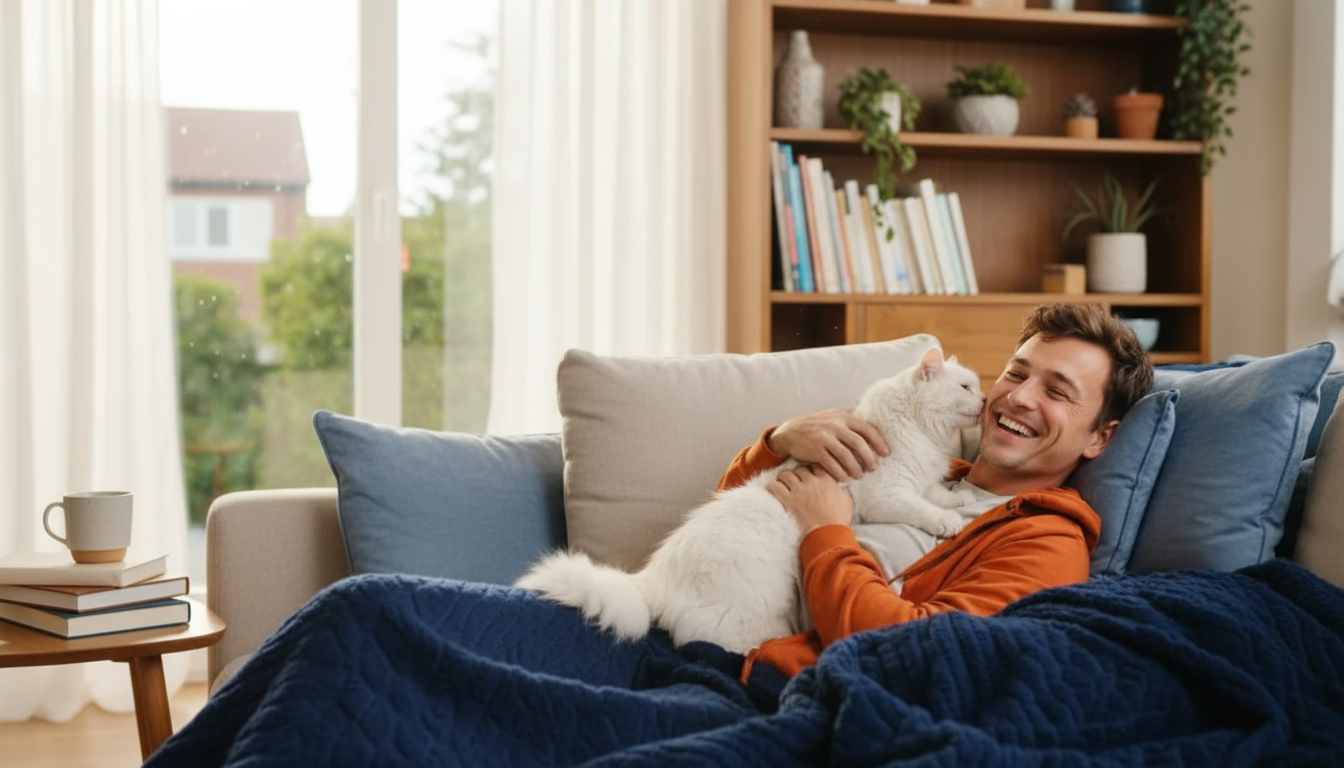
What is a cat’s body language when lying down?
A cat’s posture while lying down can reveal whether they feel safe, curious, tense, or ready to interact. Because cats can rest without fully “checking out,” small details—tail position, ear angle, paw placement, and muscle tone—often matter more than the fact that they’re on the floor or couch.
Relaxed and comfortable signals
A loose, sprawled position with legs stretched out, a soft belly, or a gently curved body typically indicates comfort. Slow blinks, half-closed eyes, and whiskers resting naturally to the sides are common signs of ease. If the tail is still or loosely draped, your cat likely feels secure in the space.
Alert but calm “loaf” posture
When a cat tucks their paws under their chest (often called a “loaf”), they may be resting while staying ready to move. Look for a neutral tail and ears that rotate toward normal sounds. This posture often means your cat is content but monitoring what’s happening around them.
On the side vs. on the back
Lying on the side usually signals comfort with quick access to stand up if needed. A cat on their back with the belly exposed can indicate trust, but it does not automatically mean they want belly rubs. If paws are slightly curled and the body looks loose, it’s a relaxed display; if paws are tense or the tail flicks, touching may trigger a defensive grab or bite.
Stress, irritation, or “don’t touch” cues
Watch for a stiff body, tightly tucked tail, rapid tail flicking, ears pinned back, dilated pupils, or a tense jaw/whiskers pushed forward. Even while lying down, these signs can mean overstimulation, pain, or that your cat wants space.
For more detailed examples of common resting positions and what they can mean, visit the complete guide here.
FAQ
Why does my cat purr when lying next to me?
Purring while resting near you often signals comfort and social bonding. Some cats also purr to self-soothe, so pair it with relaxed ears, soft eyes, and a loose body to confirm they’re content.










Leave a comment